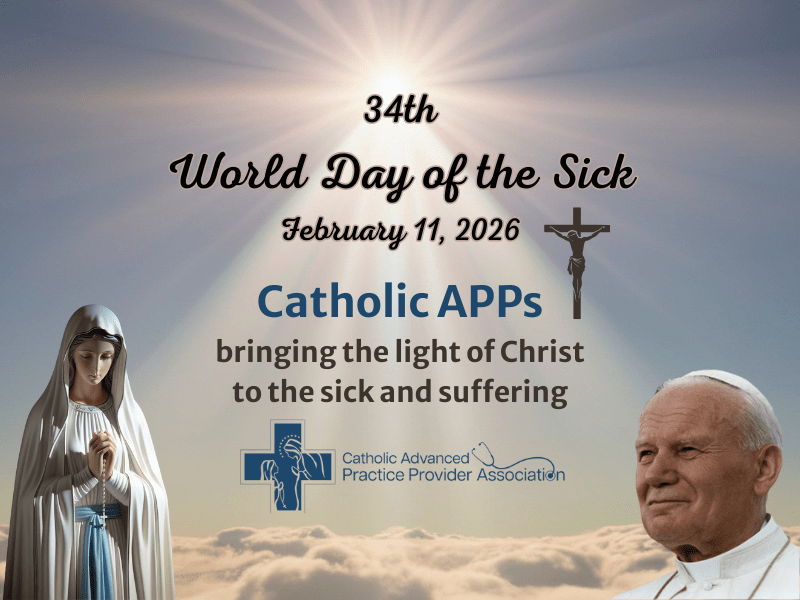

This annual observance was instituted on 13 May 1992 by the saintly Pope John Paul II and is celebrated on 11 February that is also the memorial of Our Lady of Lourdes.
Jesus sought healing for the entire person — spirit, soul, and body. His compassion for the sick and dying was such that He even identified with them in both word and deed. In the Catechism of the Catholic Church, you would read this, “His preferential love for the sick has not ceased through the centuries to draw the very special attention of Christians toward all those who suffer in body and soul. It is the source of tireless efforts to comfort them” (CCC, n. 1503). Christ’s compassion toward the suffering, even identifying with them (“I was sick and you visited me”), is the source of the Church’s preferential love for the sick. This imperative drives tireless efforts to comfort the ill, treating sickness not just as physical suffering but as an occasion for spiritual closeness to Christ’s passion and for exercising charity. Illness, then, is not merely a curse; it can be a “participation in the saving work of Jesus” (CCC, n.1522), allowing the sick to contribute to the good of the Church.
The Nature of Actionable Compassion
In a collection of sayings by Christian Nestell Bovee titled Thoughts, Feelings, and Fancies, the following is a paraphrase of one of the entries, “Compassion is a language that the deaf can hear and the blind can see.” What is characterized as Actionable Compassion is the kind of outwardly directed love demanding that the sick be treated with dignity, and in cases of extreme vulnerability, it calls for specialized physical, emotional, and spiritual care rather than abandonment. This active form of compassion is the practice of moving beyond mere empathy to actively alleviating the suffering of others through concrete, often courageous, steps. It incorporates recognizing distress, feeling for the individual, and implementing solutions, such as active listening, volunteering, setting boundaries, or advocating for justice. Its Core Components are:
- Recognition: Actively noticing another’s struggle or distress
- Understanding: Comprehending the situation while maintaining enough emotional stability to act without becoming overwhelmed (avoiding empathic overload)
- Motivation: A genuine desire to alleviate suffering
- Action: Taking tangible steps—small, everyday gestures, or larger, courageous interventions on the behalf of the suffering.
As a type of compassion, actionable compassion is a proactive, sacrificial response to human need that goes beyond mere sympathy to provide tangible help, healing, and dignity. Such active compassion is rooted in the life of Jesus, who frequently moved toward those that other respectable members of society avoided, such as the sick, outcast, and marginalized.
Catholic theology views sickness not as a direct punishment from God, but as a consequence of the brokenness of the world (original sin) that, with God’s grace, can be transformed into a means of spiritual growth and union with Christ’s Passion. Compassion, then, is not something you feel or observe because, when you have compassion in your heart, its presence compels you to help or take action. This reaction to another’s plight, then, is grace, kindness, mercy, and loving tenderness, but all intertwined.

Leave a comment